
CIRRIWATER
More efficient circulation of horticultural irrigation surplus water means less wastewater
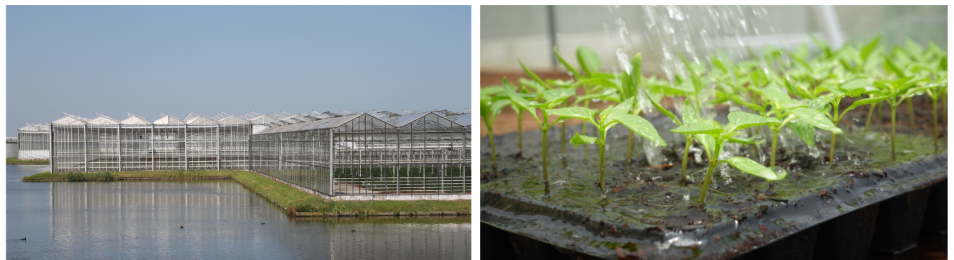
In the Central Baltic region, greenhouse cultivation is a significant part of the agricultural sector, but irrigation practices are still often based on linear systems where excess water and valuable nutrients are lost. While some large operators already recycle irrigation water, many SMEs in the greenhouse sector lack the necessary resources, expertise, or tools to do so. As costs rise and environmental requirements become stricter, transitioning to circular economy-based irrigation solutions is becoming increasingly urgent even in traditionally water-rich regions such as Estonia, Finland, and Latvia. SMEs also need flexible, cost-effective, and practical solutions for recycling irrigation water.
CIRRIWATER addresses this challenge by first mapping the current situation and then developing models for the reuse of excess irrigation water and nutrients. The goal is to make circular economy solutions accessible to a wider range of growers. The project brings together research organizations, greenhouse sector experts, growers, and business development organizations to develop practical tools. These include modeled solution scenarios for long-term planning as well as practical pilot projects in all three participating countries.
As a result of the project, two improved circular economy models will be created for both water reuse and nutrient recovery. The project outcomes will benefit growers, SMEs, policymakers, and business support organizations by supporting the adoption of smart, resource-efficient, and scalable solutions beyond the pilot areas.
CIRRIWATER uses a collaborative cross-border approach to ensure that the developed tools are suitable for different national operating environments and various greenhouse types. Both end users and policy-level actors are involved in the co-creation process, increasing interest, adoption, and long-term impact beyond the duration of the project.
The project implementation period is from 1 May 2026 to 30 April 2029. The project is funded by the European Union through the Central Baltic Interreg Programme. The lead partner is Satakunta University of Applied Sciences, and the other project partners are Estonian University of Life Sciences, Prizztech Oy, and Latvian Institute of Horticulture.
Read more about the project on the lead partner’s WANDER Research Center website:
Explore the other project partners through the links below:
- Estonian University of Life Sciences
- Latvian Institute of Horticulture
Further information:
Project manager
Julia Pihlavisto-Hakala
julia.pihlavisto-hakala@prizz.fi
+358 50 434 2163